Designing a Data-Driven UX for News Validation
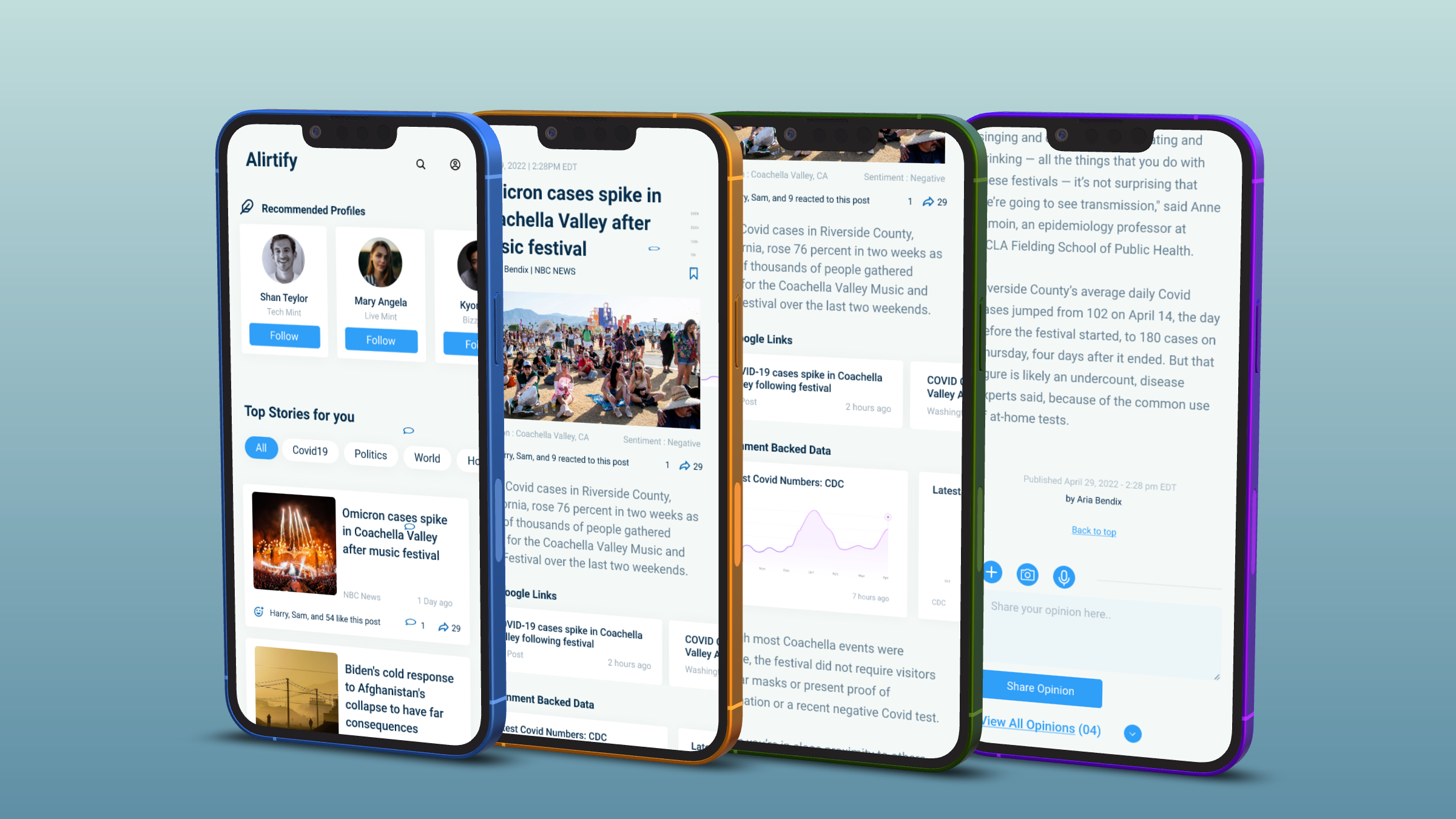
Alirtify is a news aggregator and discussion platform where users interact with articles through likes, reactions, and comments.
The founding idea was that engagement signals could help people identify trustworthy news.
My team was brought in to validate this assumption before building further.
Understand how people currently validate news and identify what signals genuinely help them decide whether a story is trustworthy—without telling them what to believe.
User interviews
- 7 participants
- Diverse age groups and occupations
- We assumed that age and profession significantly influence news consumption and trust behaviors, so we intentionally recruited across these dimensions.
Social validation matters, but who matters more
Research insight
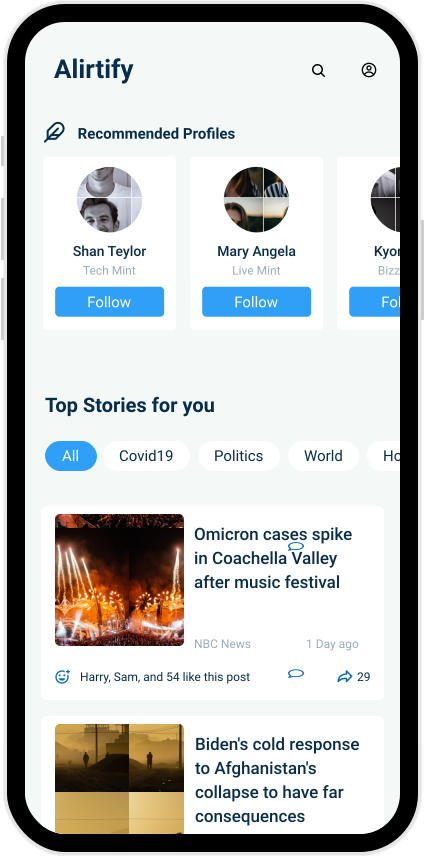
Users care more about whether people they know and trust engaged with an article than abstract global engagement numbers.
UX decision
Surface engagement from a user’s social circle (friends, family, trusted connections) alongside broader engagement metrics to provide more meaningful validation.
Headlines strongly influence trust
Research insight
Clickbait headlines consistently reduced credibility. Many users decided whether to trust or ignore an article based on the headline alone.
UX decision
Introduce AI-generated neutral headline alternatives, allowing users to quickly understand the article without emotional manipulation.
News source is a primary trust signal
Research insight
Participants relied heavily on news sources to judge credibility, but the existing interface underemphasized the source.
UX decision
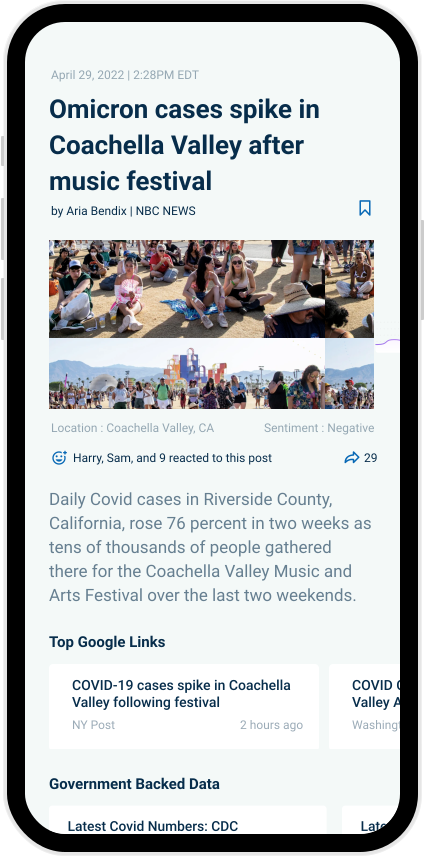
Visually prioritize the news source in both feed and article views.
Users seek context outside the app
Research insight
Many users cross-checked articles using Google or other platforms to understand broader context or multiple perspectives.
UX decision
Embed related and trending articles directly below the article summary.
Official data builds confidence
Research insight
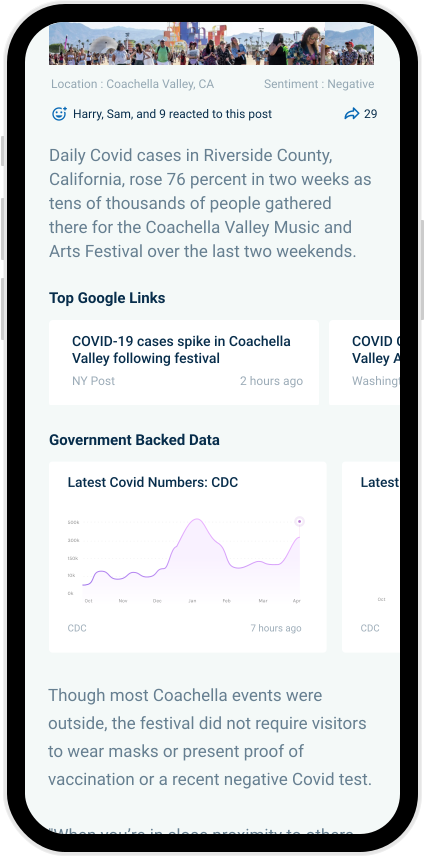
When topics involved policy, public health, or civic issues, users actively looked for government or verified data sources.
UX decision
Supplement articles with government-backed or verified public datasets where relevant.
The CEO shared that the engagement provided valuable clarity on validating assumptions early, particularly around research-driven UX decision making.
This project strengthened my ability to conduct in-person research, adapt interview plans in real time, and translate qualitative insights into ethical product decisions.